MODELS
Isuzu’s 2.2 Bi-Turbo Outruns the D-Max 3.0
Isuzu’s Thai 2.2 bi-turbo beats the D-Max 3.0 on power and claimed economy, a 2028 Euro 6d deadline the 4JJ3 was never certified to meet.

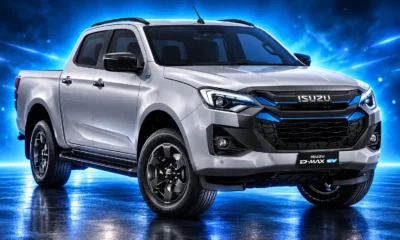
Isuzu launched a 2.2-litre bi-turbo diesel in Thailand on 22 October 2026 that makes more power than the D-Max 3.0. Peak output is 150kW and 500Nm, against 140kW and 450Nm from the 4JJ3-TCX still sold in Australia.
The 2.2 Ddi MAXFORCE Biturbo will be in Thai D-Max and MU-X showrooms from 30 October 2026. Isuzu Ute Australia says the engine is specific to Thailand and has no local announcement.
The Smaller Engine Makes More Power
The new engine sits on the RZ4F 2.2-litre four that Australia already uses in single-turbo form. A second turbo, a 250MPa 10-hole injector set, and a retuned eight-speed automatic take it past the 3.0 that built the D-Max’s name. Isuzu Thailand rates it at 204 PS and 500 Nm, with peak power at 3,600rpm and peak torque from 1,600rpm to 2,600rpm.
That is 10kW and 50Nm more than the Australian 3.0, from a 2,164cc block instead of 2,999cc. Against the 3.0, Isuzu claims the bi-turbo is 8 per cent more fuel efficient in extra-urban running, 5 per cent quicker from 0-100km/h, and 12 per cent quicker from 80-100km/h. Full consumption figures have not been published.
HOW THE THREE DIESELS COMPARE
| Engine | Power | Torque | Gearbox | As sold |
|---|---|---|---|---|
| 3.0 4JJ3-TCX (Australia) | 140kW | 450Nm | 6-speed auto | Euro 5 |
| 2.2 RZ4F-TC single-turbo (Australia) | 120kW | 400Nm | 8-speed auto | Euro 5 |
| 2.2 MAXFORCE Biturbo (Thailand) | 150kW | 500Nm | 8-speed auto or 6-speed manual | Thai Euro 5; export Euro 6 with SCR |
Thai buyers still get the 3.0 on some two-door grades. High-spec V-Cross 4×4 and MU-X RS trucks take the bi-turbo, with lime-green RS accents and a new grille. Visual changes on the 2027 facelift are light: revised front fascias, new grille inserts, and different fog-light surrounds.
ใหม่! อีซูซุ ดีแมคซ์ "พลังใหม่! ไบเทอร์โบ แรง…หยุดโลก"
กับเครื่องยนต์ใหม่! ISUZU 2.2 Ddi MAXFORCE Biturbo
• กำลังสูงสุด 204 แรงม้า
• แรงบิดสูงสุด 500 นิวตัน-เมตร
• ประหยัดน้ำมันกว่า 8%*สัมผัสความแรง คลิก: https://t.co/KxbdbMs6rT#ดีแมคซ์แรงหยุดโลก#isuzu22DdiBiturbo pic.twitter.com/OivGFemxmR
— Isuzu Thailand Official (@IsuzuThai) October 22, 2026

1 July 2028 Closes the Door on Euro 5 Utes
The 3.0 is not in trouble because a 2.2 made more newton-metres on a Thai stage. It is in trouble because Australia’s existing D-Max and MU-X are still certified to Euro 5, and that ticket runs out. Light vehicles already on sale must comply by 1 July 2028 if the maker wants to keep supplying them. Models first approved from 1 December 2025 already had to meet the new rules.
The package is the ADR 79/05 Euro 6d light-vehicle rule, plus ADR 111/00 lab tests and ADR 112/00 real-driving tests. It is a noxious-emissions standard, not a CO2 cap. The New Vehicle Efficiency Standard, which does set CO2 targets, started on 1 January 2025 and is a separate law.
WHAT EURO 6D CHANGES FOR UTES AND SUVS
- Diesel NOx, passenger: The cap falls from 180mg/km to 80mg/km for cars and SUVs such as the MU-X.
- Diesel NOx, light commercial: Utes such as the D-Max fall from 280mg/km to 125mg/km.
- Stated cut: The government puts the diesel NOx limit reduction at 55 per cent.
- Fitment cost: The extra hardware is expected to add $450 to $1,000 to the cost of supplying each new light vehicle.
Vehicles already registered stay as they are. Used 4JJ3 trucks are not pulled off the road. The pressure is on the next one Isuzu wants to put on a dealer floor after 1 July 2028.
The 4JJ3 Was Kept Off Europe’s Books
The 4J diesel family has underpinned Isuzu utes for more than 20 years. The current 4JJ3-TCX arrived with the latest D-Max around 2019 and 2020, with fuel injection and internals revised enough for Isuzu to treat it as a new engine. Outputs moved to 140kW of power and 450Nm from 1,600rpm to 2,600rpm. It uses a diesel particulate diffuser and no urea tank in Australian spec.
That calibration meets Euro 5. It was never sold in Europe. Europe took a 1.9-litre diesel at 110kW and 350Nm that already cleared Euro 6. Only Australia and Thailand received the bigger engine, which is why the 3.0 still feels like the “real” D-Max here and why there is no Euro 6 4JJ3 sitting on a shelf.
Isuzu Ute Australia managing director Junta Matsui said in 2024 that local buyers still wanted the 3.0 in higher grades, and that he saw no market then for stretching the smaller diesel up the range. The company later did bring a bigger small diesel, but it was the single-turbo 2.2, and it went into the grades the 1.9 had occupied.
THE 3.0’S AUSTRALIAN CLOCK
- 2019-2020: The 4JJ3-TCX launches with the current D-Max at 140kW and 450Nm, Euro 5, Australia and Thailand only.
- 1 January 2025: The New Vehicle Efficiency Standard starts setting brand CO2 targets for new light vehicles.
- October 2025: The Australian RZ4F-TC 2.2 replaces the 1.9, pairs with an eight-speed auto, and raises braked towing on those grades from 3,000kg to 3,500kg. Manuals leave the price list. Idle stop-start is added to the 3.0 as well.
- 1 December 2025: New light-vehicle models first supplied to Australia must meet Euro 6d.
- 22 October 2026: Isuzu Thailand unveils the 2.2 bi-turbo at 150kW and 500Nm.
- 30 October 2026: Facelifted D-Max and MU-X with the bi-turbo go on Thai sale.
- 1 July 2028: Every new light vehicle supplied in Australia, including carryover D-Max and MU-X, must meet Euro 6d.
Isuzu Ute Australia’s own specification sheet still lists both the 3.0 and the local 2.2 as Euro 5. The RZ4F family can be certified to stricter Euro 6 rules for export. The 3.0, in the form sitting in Australian sheds, cannot.
Two Turbos, an Eight-Speed, and AdBlue
The bi-turbo is a sequential pair, not two snails blowing at once all the time. A small high-pressure turbo with electrically variable geometry starts making boost from about 1,000rpm to 1,200rpm so the 2.2 does not feel hollow off idle. A larger fixed-geometry turbo takes over from about 2,200rpm so 500Nm and 150kW hold without the small housing choking the exhaust. Bypass valves, run by the engine computer, dump the small turbo at high revs so its turbine is not oversped.
Isuzu also fitted Gi-BOOST 10-hole injectors at 250MPa, low-friction pistons with an Evoglide-style coating, a thicker cast-iron block, piston cooling jets, and a larger front-mounted intercooler. The eight-speed automatic is the same architecture already fitted to the Australian single-turbo 2.2, retuned for the extra torque. Thailand still offers a six-speed manual on selected D-Max grades. Australia dropped manuals when the 2.2 arrived.
Thai-market 2.2 engines, single-turbo and bi-turbo, meet Euro 5 without AdBlue. They lean on in-cylinder work, the particulate filter, and EGR. An export tune aimed at Euro 6 needs selective catalytic reduction and a urea tank, because EGR and a filter will not cut NOx to the new Australian caps. That is the hardware change Australian buyers should expect if this engine is signed off here, along with the extra supply cost the government already flagged.
High-pressure injection at 2,500 bar is also less forgiving of dirty or wet diesel than older, lower-pressure pumps. That is a workshop fact, not a slogan, and it is one reason other markets have talked about fuel-quality testing before they take the engine.
It Matches HiLux Power After Ford Axed Bi-Turbos
On the sheet, the Thai 2.2 now matches a Toyota HiLux 2.8 automatic at 150kW and 500Nm. The HiLux manual is 150kW and 420Nm. Isuzu has closed a gap that used to be a standing joke in dual-cab parks, and it has done it without stretching the 4JJ3.
Ford Australia went the other way. It dropped the Ranger and Everest 2.0-litre bi-turbo, which made 154kW and 500Nm, during 2026. Volume shifted toward an upgraded single-turbo 2.0 and a wider spread of the 3.0-litre diesel V6 at 184kW and 600Nm. The layout Isuzu is now selling in Thailand, a small four with two turbos and about 500Nm, is the one Ford has just walked away from.
A 2.2 that tows like a 3.0 on paper still has to prove heat control, turbo life, and gearbox calibration with a van on the back. Current Australian D-Max 2.2 and 3.0 grades both carry a 3,500kg braked rating once a genuine tow kit and brake controller are fitted. The Thai bi-turbo has no Australian tow figure yet, because it has no Australian certification.
Mazda’s BT-50 Shares the Same 3.0 Block
Mazda’s BT-50 is an Isuzu-built twin with the same 4JJ3-TCX and the same Transtron engine computer. If the 3.0 cannot be certified past 1 July 2028, Mazda is on the same clock. The single-turbo 2.2 is already in the BT-50 conversation because it arrived in the Isuzu range in October 2025. A bi-turbo 2.2 would be the obvious next common part if both brands want a 150kW diesel without a Euro 6 3.0.
Owners who bought a D-Max, MU-X or BT-50 for the 3.0’s reputation will not move because a press slide says 500Nm. In the first days after the Thai launch, bakkie buyers still talked about sticking with the 3.0, even while others called 150kW from 2.2 litres the sweet spot. That split is the local problem Isuzu Ute Australia has to price and warranty, not a forum sideshow.
The 3.0’s aftermarket is already deep, with cabin-switch maps for tow and power on D-Max, MU-X and BT-50. A new sequential-turbo 2.2 with 250MPa injectors and, in Euro 6 form, an AdBlue system, resets that industry. Workshops will be starting again on a different block, not carrying 4JJ3 files across.
Isuzu Ute Australia Has No Australian Date
Isuzu Ute Australia already sells the single-turbo RZ4F at 120kW of power and 400Nm with the eight-speed auto. That engine replaced the 1.9 and was presented as a complement to the 3.0, not a replacement. The bi-turbo uses the same family and the same gearbox count, which is why it is the path of least resistance if the 4JJ3 cannot be made to pass Euro 6d.
A spokesperson would not put it on a local timeline.
Isuzu Ute Australia continually considers future product opportunities based on local customer needs, market conditions and regulatory requirements. However, we have no announcements to make regarding this powertrain for Australia at this time.
Spokesperson, Isuzu Ute Australia
The bi-turbo is, in that line, still a Thai engine. The 3.0 remains the engine Australian D-Max and MU-X buyers are being sold, with idle stop-start tacked on for CO2. Thai customers can order 150kW from 30 October 2026. The 4JJ3 still has a showroom until 1 July 2028, and no Euro 6 version of it has been shown.